Should Your ERP and eCommerce Be Managed by the Same Partner?
For wholesalers and distributors, online ordering is not just a website project. It connects stock, pricing, customers, invoices, delivery rules and sales orders. That makes partner ownership more important than many businesses realise.
What this guide covers
- check_circleWhen separate partners can become difficult
- check_circleWhy integration ownership matters
- check_circleWhat wholesalers should ask before choosing a partner
- check_circleHow a single ERP and eCommerce partner simplifies support
- check_circleWhen two partners might still make sense
When eCommerce stops being just a website
Many eCommerce projects begin with a simple goal: let customers place orders online and reduce calls to the sales office.
At first, it can seem natural to separate the work. One company supports Microsoft Dynamics 365 Business Central or Dynamics NAV. Another company builds the website.
That can work when the website is mainly for marketing. But wholesale eCommerce usually needs much more. The site must understand customer pricing, live stock, credit accounts, delivery rules, VAT, invoices and order processing.
Where ownership breaks down
The problem is rarely the website alone
When something goes wrong in wholesale eCommerce, the issue often sits between the website, the integration and the ERP. That is where two-partner projects can become slow, because nobody is looking at the full journey from customer login to sales order creation.
Cannot see the agreed price
The customer expects their trade price, but the website shows a standard price.
Checks the storefront
They can see the price displayed online, but need to know what Business Central is sending.
Checks the ERP data
The price may exist in the ERP, but the question becomes whether it is mapped and synchronised correctly.
The sales team steps in
Staff manually check the account, confirm the price and process the order while suppliers investigate.
Why wholesale is different
Wholesale eCommerce needs ERP thinking
A retail website can often run with a simple product catalogue and checkout. A wholesale website usually needs to follow the rules that already exist inside the ERP.
Pricing
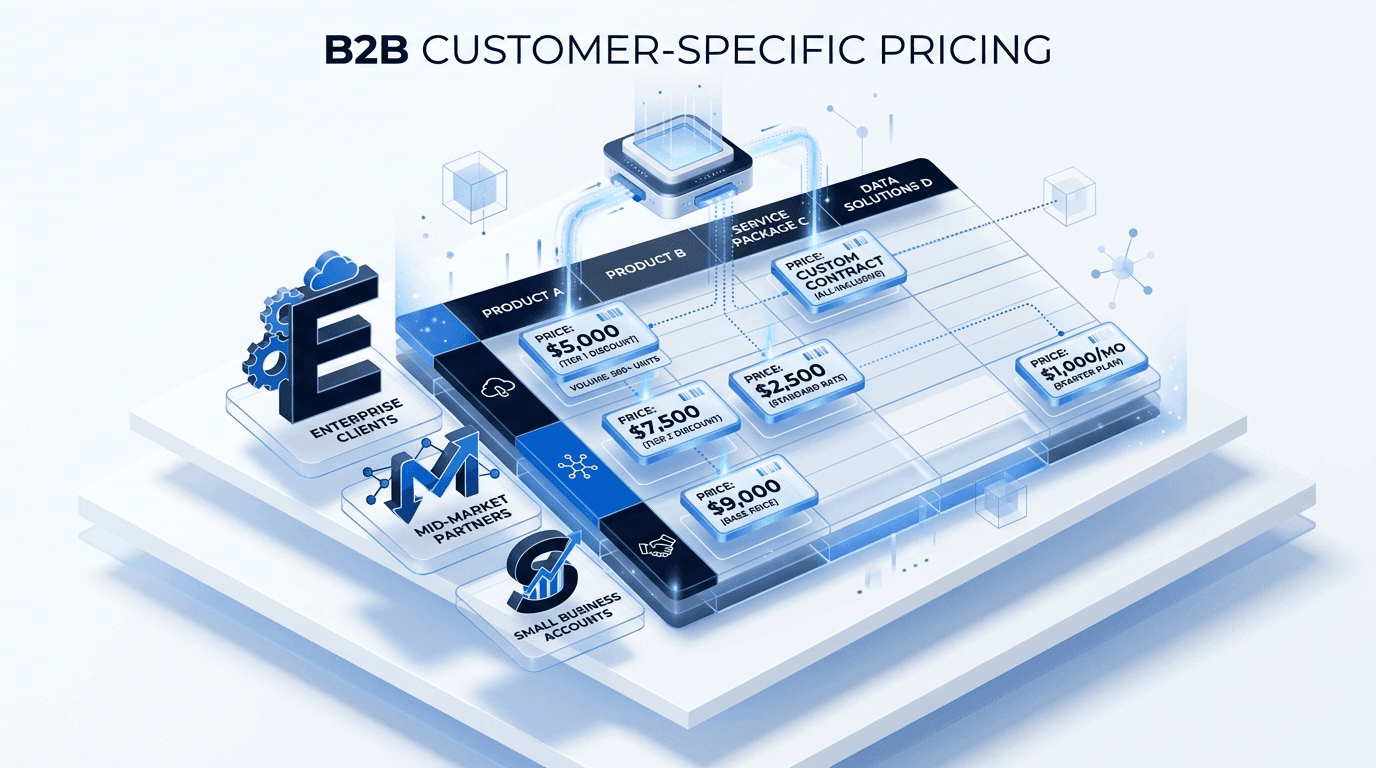
Customer-specific pricing, contract prices, trade discounts and price groups.
Stock
Live availability, multiple warehouses and units such as each, box, case or pallet.
Orders
Sales orders, order history, invoices and customer account records.
Delivery
Minimum order values, delivery days, postcode rules and collection options.
The hidden cost
Your team becomes the bridge between suppliers
Two suppliers may not look more expensive at the beginning. The real cost often appears later through internal coordination, repeated explanations and manual checking.
What your team ends up doing
- check Explaining the same issue to two support teams
- check Checking whether data has synchronised
- check Joining calls between technical suppliers
- check Manually correcting failed or delayed orders
- check Testing the same change across two systems
What one connected partner should reduce
- check Supplier handovers
- check Unclear accountability
- check Duplicate support tickets
- check Integration blame between systems
- check Pressure on internal users after go-live
Separate partners vs one connected partner
The difference is not only who builds the website. It is who owns the operational outcome.
| Area | Separate Partners | One Connected Partner |
|---|---|---|
| Support | Issues may move between suppliers. | One team can review the full process. |
| Pricing | ERP pricing and website display may need separate investigation. | Pricing logic is considered from ERP to checkout. |
| Orders | Failed orders can require multiple support routes. | Order flow is owned from website to Business Central. |
| Changes | Small changes may need coordination between companies. | ERP, website and integration changes can be planned together. |
How Orca approaches it
One partner for the journey, not just the software
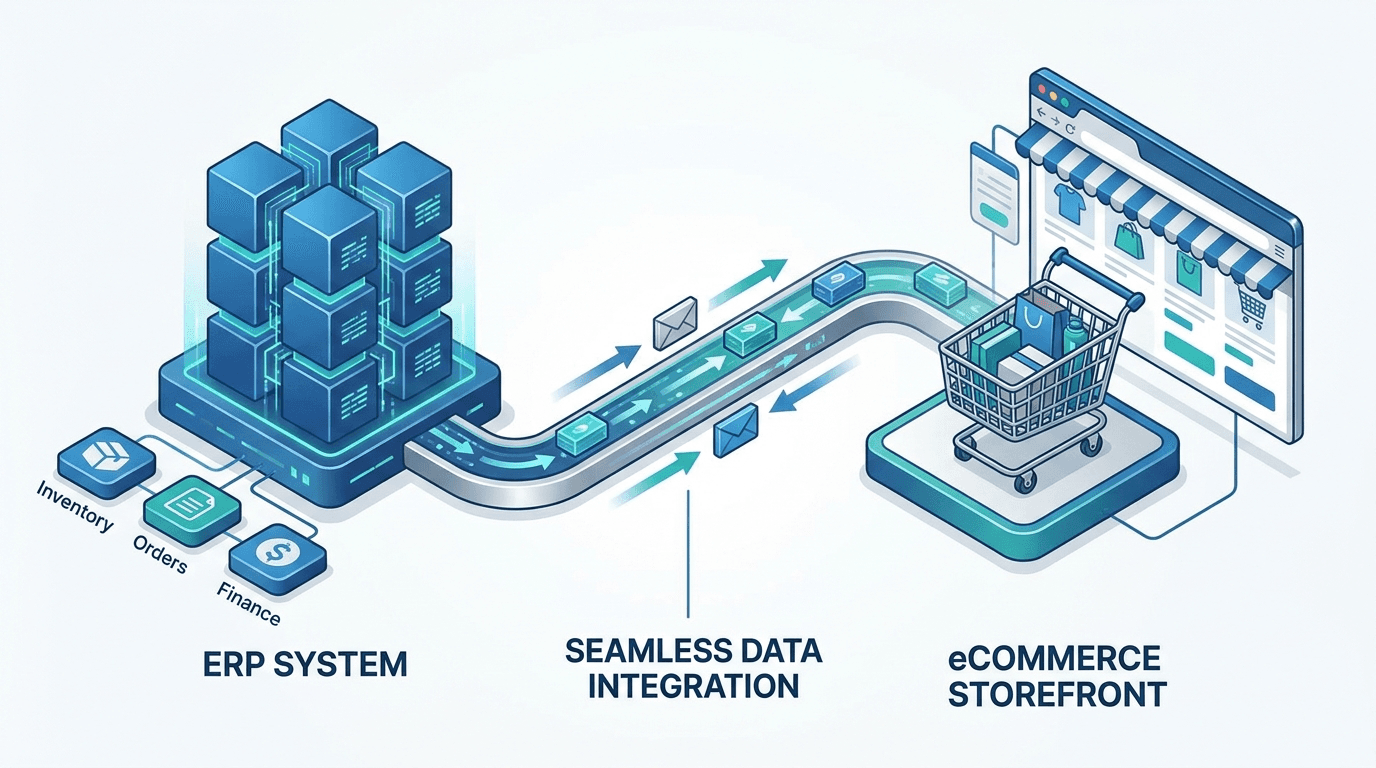
Orca Commerce is designed for wholesalers and distributors that do not want online selling to sit separately from their ERP. It works with Microsoft Dynamics 365 Business Central and Dynamics NAV, allowing products, customers, prices, orders and web-related information to stay connected to the ERP environment.
For the business
Less duplication and fewer conversations between disconnected suppliers.
For the customer
A more reliable buying experience with accurate pricing, stock and order information.
For the internal team
Clearer ownership when changes, issues or improvements are needed after go-live.
Decision guide
When should you use one partner?
The more operational your eCommerce platform becomes, the more important partner ownership becomes.
Two partners may be fine when...
- check The website is mainly for marketing content.
- check Customers do not need account-specific pricing.
- check Orders do not need to flow into the ERP automatically.
- check The site is not central to daily operations.
One partner is stronger when...
- check The website handles trade ordering.
- check Pricing, stock and customers come from Business Central or NAV.
- check Delivery rules and order processing matter.
- check You need one team to support the full journey.
Questions to ask before choosing an eCommerce partner
These questions help reveal whether the project will be straightforward to support after go-live.
Who owns the integration if something fails?
Make sure responsibility is clear before go-live, not after the first support issue.
Who supports customer pricing issues?
Customer-specific pricing often depends on ERP logic, customer groups and website display.
Who checks whether orders reach the ERP?
Online orders must be reliable enough for warehouse, finance and customer service teams.
Who understands your warehouse and delivery process?
Wholesale eCommerce is connected to stock, picking, delivery, invoicing and customer service.
Explore more eCommerce guides
Frequently asked questions
Want one joined-up approach to ERP and eCommerce?
Orca Commerce connects online ordering with Microsoft Dynamics 365 Business Central and Dynamics NAV, helping wholesalers reduce complexity and improve accountability.