What Is the Best ERP for Wholesale and Distribution Businesses?
Compare leading wholesale ERP systems, identify the capabilities your operation actually needs, and learn how to choose both the right software and the right implementation partner.
Direct answer
The best ERP is the one that fits your operating model, not simply the most famous platform.
For many small and mid-sized UK wholesale and distribution businesses, Microsoft Dynamics 365 Business Central is one of the strongest all-round choices because it connects finance, purchasing, inventory, sales, customer pricing and reporting, while allowing specialist warehouse, mobile sales, trade counter and B2B eCommerce capabilities to be added. Larger or more complex enterprises may also shortlist NetSuite, SAP, Epicor or Dynamics 365 Finance and Supply Chain Management. Businesses prioritising a highly modular or open-source approach may consider Odoo.
What this guide covers
- check_circleWhat wholesale and distribution businesses need from ERP
- check_circleA practical comparison of leading ERP platforms
- check_circleHow to build an ERP requirements shortlist
- check_circleWhen Business Central is the right fit
- check_circleHow to find and compare Microsoft partners
- check_circleWhy Orca is a strong choice for UK wholesalers
Why wholesale and distribution ERP is different
A wholesaler does more than issue invoices and record accounts. The business must purchase the right stock, receive it accurately, manage multiple units of measure, apply customer-specific prices, process orders quickly, pick and dispatch goods, handle returns and maintain reliable margin and cash-flow reporting.
When accounting, stock, warehouse, sales and eCommerce data sit in separate systems, teams often rely on spreadsheets and duplicate data entry. That can lead to inaccurate stock, delayed purchasing decisions, pricing errors, slow order processing and limited visibility across the business.
A suitable ERP system for wholesale distribution should create one operational record across finance, inventory, purchasing, sales, fulfilment and reporting.
Essential features in wholesale distribution ERP software
Accurate inventory control
Real-time stock by location, available-to-promise visibility, replenishment, stock counts and item traceability.
Purchasing and supplier management
Purchase planning, supplier lead times, outstanding orders, landed costs and purchasing approvals.
Fast sales order processing
Quotes, sales orders, back orders, credit limits, returns and clear fulfilment status.
Complex pricing and units
Customer-specific pricing, price groups, quantity breaks, promotions, cases, packs and individual units.
Warehouse operations
Goods-in, put-away, picking, packing, transfers, barcodes, handheld devices and dispatch control.
Reporting and profitability
Margin by item, customer and order, purchasing trends, stock ageing, cash flow and management reporting.
Connected channels
Integration with B2B eCommerce, EDI, marketplaces, POS, CRM, payment and delivery systems.
Scalability and support
The ability to add users, locations, companies, automation and new processes without replacing the core platform.
Best ERP systems for wholesale and distribution: a practical comparison
There is no universally best distribution ERP. The strongest shortlist depends on business size, process complexity, existing technology, internal skills and budget.
| ERP platform | Often best suited to | Strengths | Points to examine |
|---|---|---|---|
| Microsoft Dynamics 365 Business Central | Small and mid-sized wholesalers, distributors and multi-channel businesses | Connected finance and operations, Microsoft ecosystem, broad partner network, strong extension model | Confirm warehouse depth, integrations and partner-specific solution design. |
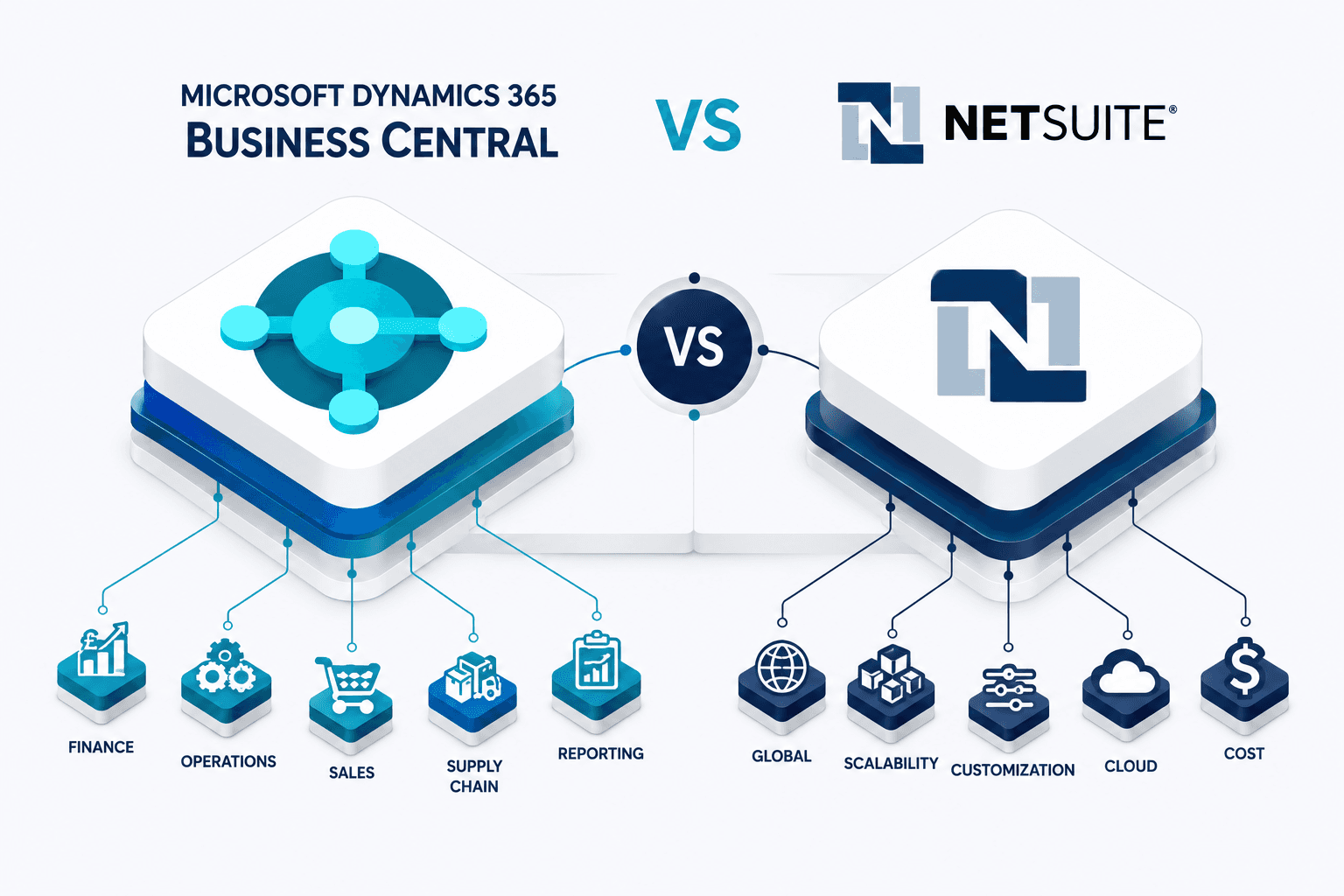
| Oracle NetSuite | Fast-growing, multi-entity and international organisations | Cloud-native suite, multi-company consolidation and broad global capability | Implementation scope, administration, localisation and total cost. |
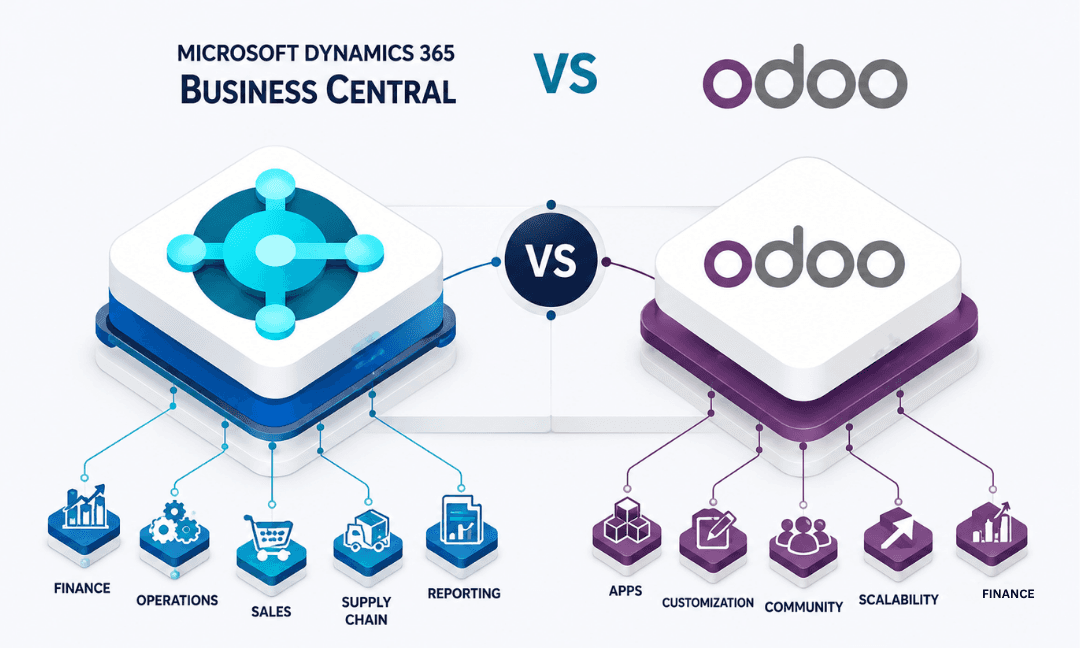
| Odoo | Businesses seeking modularity and extensive process customisation | Broad application range, flexible modules and open-source ecosystem | Governance, upgrade path, customisation quality and support model. |
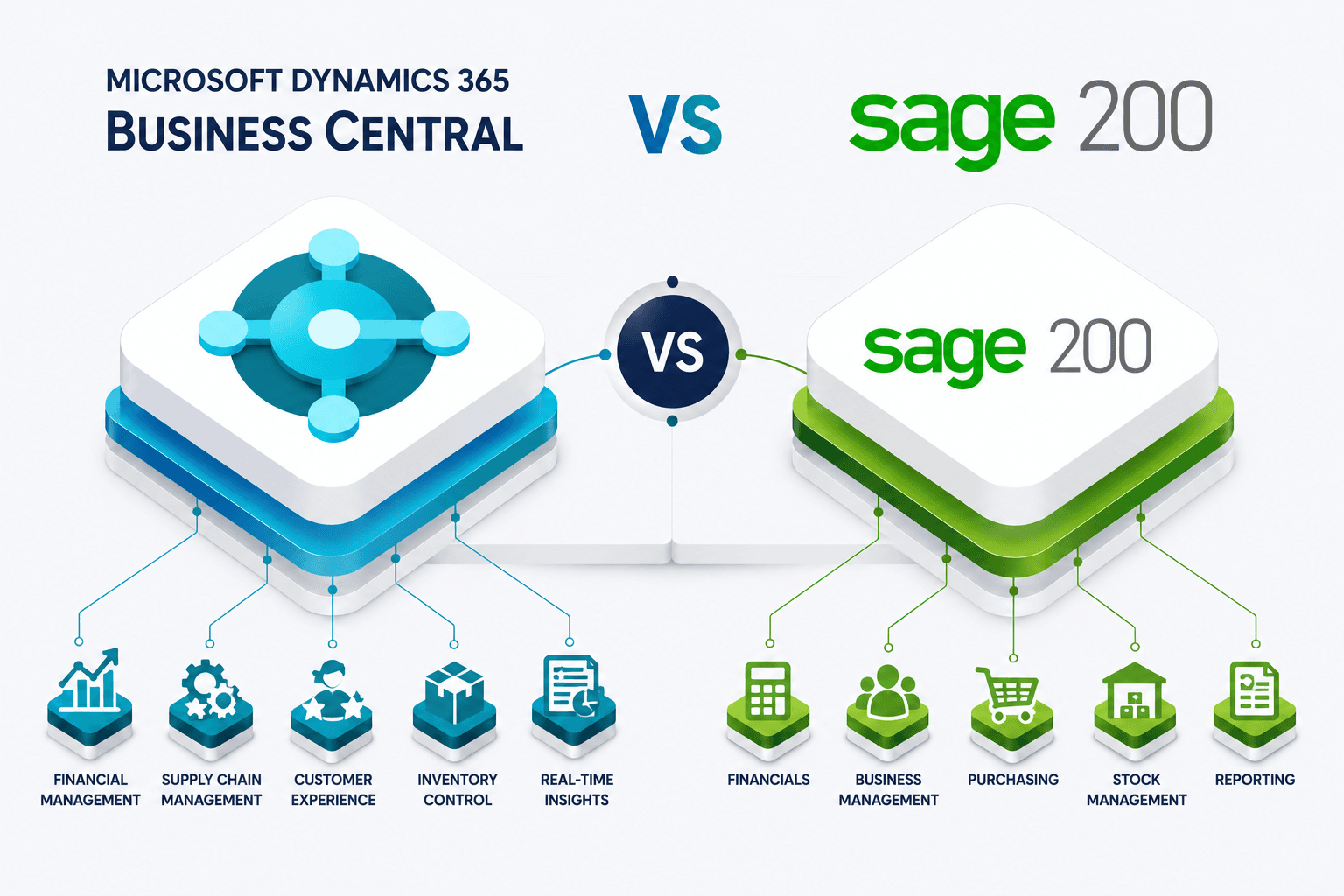
| Sage 200 | UK businesses wanting to extend beyond entry-level accounting | Familiar UK ecosystem and established financial and commercial functionality | Long-term cloud strategy, integration requirements and operational scalability. |
| SAP Business One | Established SMEs with structured distribution or light manufacturing needs | Broad ERP functionality and international partner ecosystem | User experience, project complexity and add-on dependency. |
| Dynamics 365 Finance & Supply Chain Management | Larger, complex or enterprise-scale distributors | Advanced financial, supply-chain, planning and multi-entity capability | Higher implementation complexity, cost and internal resource requirements. |
Use this table to create a shortlist, not to make a final purchase decision. Validate every platform against your own process scenarios and data.
How to choose the right ERP for your wholesale business
Document your current process
Map how enquiries, quotations, purchasing, receiving, stock control, sales orders, picking, dispatch, invoicing, returns and reporting work today.
Separate essential requirements from preferences
Identify must-have workflows, compliance needs, integrations and reporting. Avoid turning every current workaround into a mandatory customisation.
Use real business scenarios in demonstrations
Ask each supplier to demonstrate examples using your products, units, customer prices, warehouses and order types rather than a generic scripted demo.
Compare total cost, not licence price alone
Include discovery, implementation, data migration, integrations, extensions, training, support, upgrades and internal project time.
Assess the implementation partner as carefully as the software
The partner will translate your requirements into system design. Evaluate industry knowledge, delivery methodology, references, training and post-go-live support.
Plan for adoption and continuous improvement
Nominate process owners, clean data early, train users by role and create a roadmap for improvements after the initial go-live.
Business Central fit
When is Microsoft Dynamics 365 Business Central a strong choice?
Business Central is particularly relevant when a growing wholesaler wants to replace disconnected accounting, inventory and operational tools with one cloud business management platform and retain flexibility through Microsoft applications and partner extensions.
How to find a Business Central partner
Microsoft explains that Dynamics 365 partners can help organisations evaluate solutions, tailor business processes and provide ongoing support and optimisation. Start by using Microsoft's official directory to build a shortlist.
Use the official Microsoft Dynamics 365 partner finder
Search for partners by location and solution area, then verify that the businesses you shortlist have relevant Business Central and industry experience.
Find a Microsoft Dynamics 365 partneropen_in_newQuestions to ask a potential partner
Why Orca is a strong Business Central partner for wholesale and distribution
Orca Business Solutions is a UK-based Microsoft Dynamics 365 Business Central partner focused on wholesale, distribution, trade and inventory-led businesses. Our role is not simply to install software. We help customers shape Business Central around the way stock, purchasing, warehousing, sales and customer service operate in practice.
Wholesale and distribution experience
Practical understanding of inventory accuracy, purchasing, customer pricing, sales orders, warehouse fulfilment and reporting.
Implementation and migration
Business Central configuration and migration from legacy ERP, accounting systems and disconnected operational tools.
Connected operational solutions
Integrated warehouse management, mobile sales, trade counter POS and B2B eCommerce capabilities.
UK-based support and optimisation
Role-based training, ongoing advisory services, system recovery and improvements as the business evolves.
The strongest partner is not necessarily the largest partner. It is the one that understands your processes, challenges unnecessary complexity, communicates clearly and remains accountable after go-live.
A simple ERP selection scorecard
| Evaluation area | Suggested weighting | What to assess |
|---|---|---|
| Operational fit | 30% | Purchasing, stock, sales, warehouse, pricing and returns. |
| Implementation partner | 25% | Industry experience, methodology, references and support. |
| Integration and data | 15% | eCommerce, POS, EDI, CRM, delivery and migration. |
| Scalability | 10% | Users, locations, companies, volume and future processes. |
| Reporting and usability | 10% | Role centres, dashboards, analytics and user adoption. |
| Total cost and risk | 10% | Project, licences, extensions, support and internal effort. |
Final recommendation
Begin with your business requirements, not with a vendor name. Shortlist two or three systems that can support your stock, purchasing, pricing, warehouse, sales and reporting processes without excessive workarounds.
For many growing UK wholesalers and distributors, Microsoft Dynamics 365 Business Central deserves a place on that shortlist. Its combination of connected financial and operational capability, Microsoft integration and extensibility makes it a practical platform for businesses moving beyond spreadsheets, basic accounting software or ageing ERP systems.
The final result, however, will depend heavily on the implementation partner. Select a partner that understands wholesale operations, can demonstrate relevant processes, provides a clear delivery plan and will continue supporting the system after go-live.
Explore more ERP guides
Frequently Asked Questions
See whether Business Central fits your wholesale operation
Speak with Orca about your current systems, stock processes, warehouse workflows and growth plans.